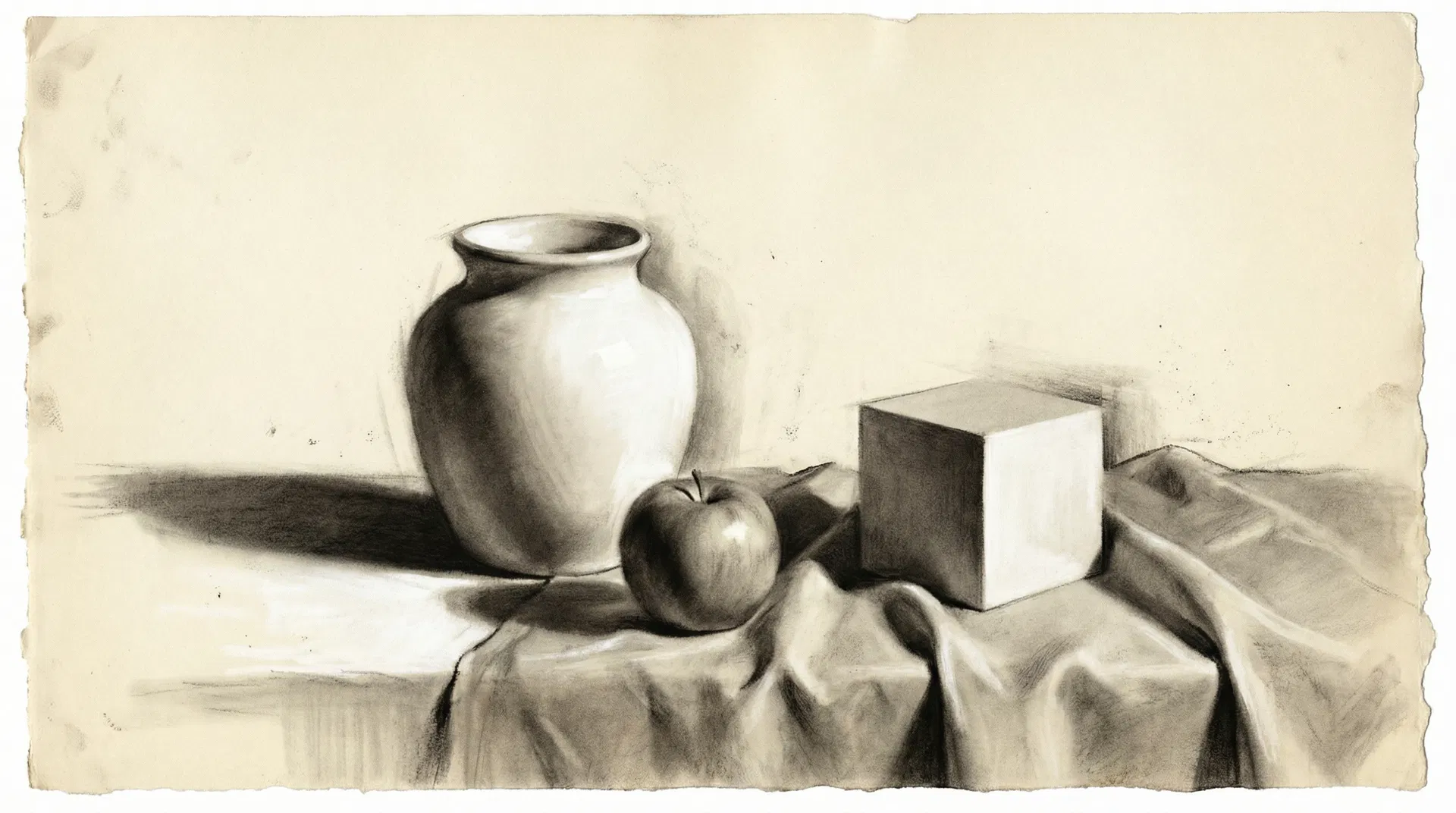
Observation & Proportion
Learn to see what’s actually in front of you, rather than what your brain tells you should be there. Four weeks of intensive observational drawing.
Overview
The foundation everything else builds on
This is where it all starts. Over four weeks, you’ll learn to actually see what’s in front of you — not what your brain tells you should be there. You’ll measure properly, understand proportion, and start working with light and shadow.
I wish someone had taught me this when I was starting out. Every drawing problem I struggled with later — portraits that didn’t look right, paintings that fell apart — came back to not having these fundamentals. Level 1 is the starting point for the whole programme, but you can also take it on its own if observation and proportion are what you want to work on.
Duration
4 weeks
One session per week
Session Length
2.5 hours
Tuesdays 6:00–8:30 PM
Cohort Size
12 students
Maximum per group
Investment
£135–£165
Early bird / Regular
Weekly Curriculum
Four weeks of learning to see
Each week builds on the last. You’ll start with basic measurement, move into understanding form, then tackle light and shadow, and finish by bringing it all together in a complete drawing.
Week 1
Measuring & Proportion
Learning to see what is actually there
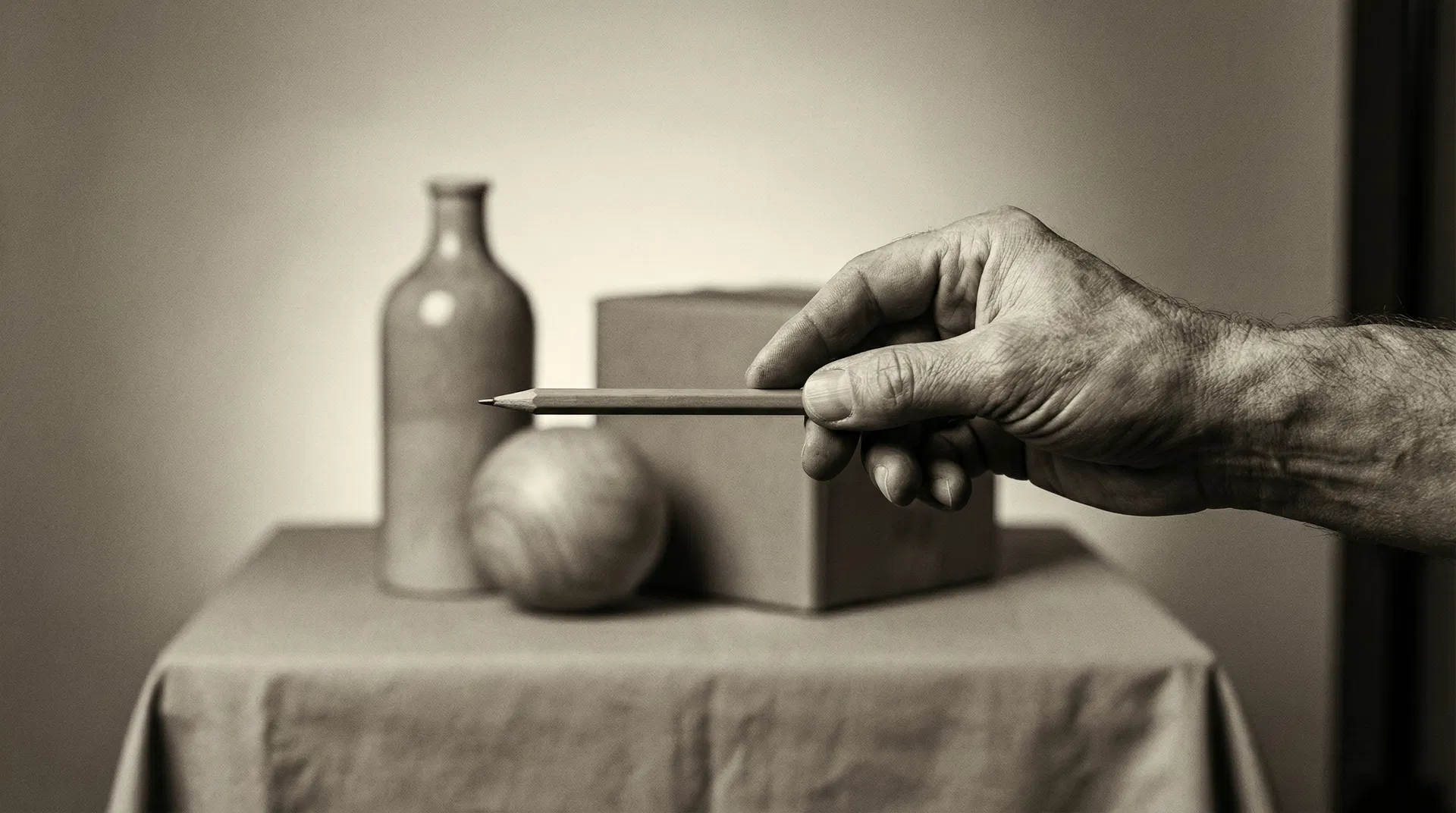
You’ll learn the classical sight-size method — holding a pencil at arm’s length and actually measuring what you see. It feels awkward at first, but it’s the single most useful skill for accurate drawing.
Activities
Introduction to sight-size measurement using pencil or knitting needle at arm’s length
Practice measuring simple still life arrangements (3–5 objects)
Progress from basic to more complex groupings
Focus on proportionally correct drawings, not finished artwork
Week 2
Form & Structure
Seeing three dimensions on a flat surface
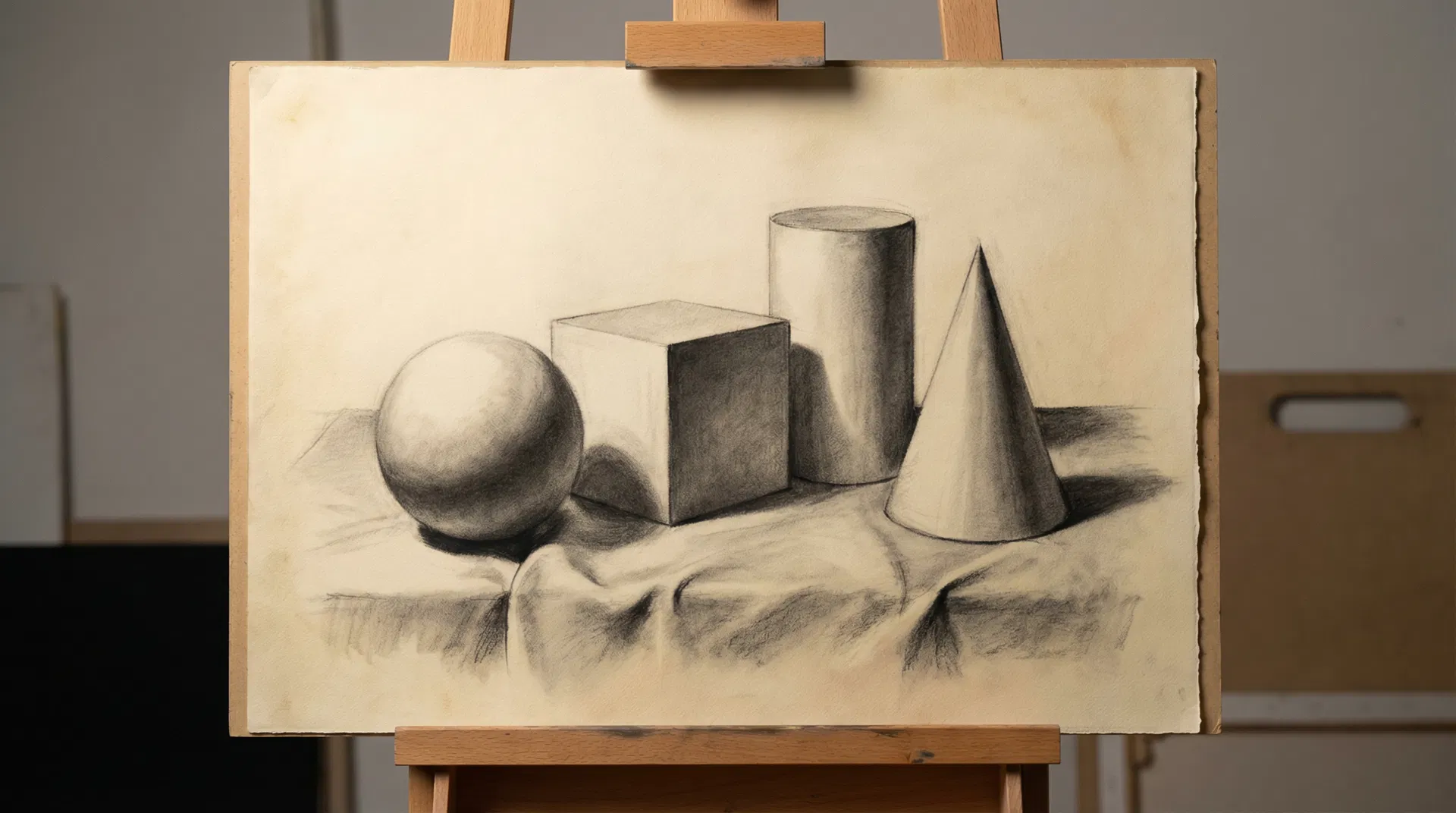
You’ll learn to see past the surface of objects and find the simple geometric forms underneath. A vase is a cylinder. An apple is a sphere. Once you can see this, everything becomes easier to draw.
Activities
Demonstration: breaking complex objects into spheres, cylinders, cubes, and cones
A vase is cylinder-based. An apple is sphere-based. A book is cube-based.
Drawing geometric objects from observation with focus on light revealing planes and curves
Understanding that form exists independently of surface texture or detail
Week 3
Light & Shadow
How light creates the illusion of form
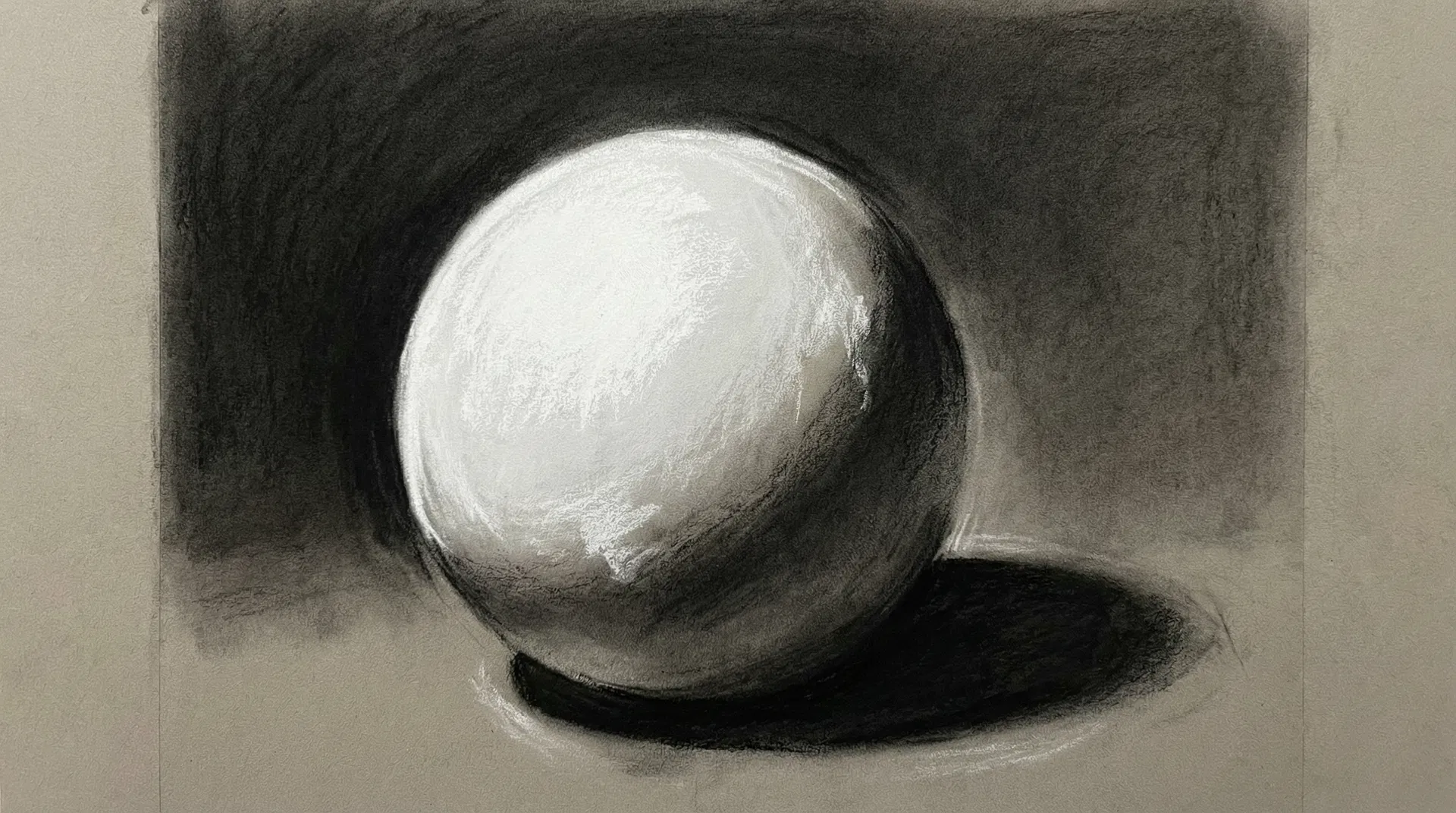
You’ll learn the seven elements of light and shadow — and more importantly, you’ll learn to observe them rather than guess at them. This is where drawings start to look three-dimensional.
Activities
Teaching the seven elements: highlight, light, shadow, core shadow, reflected light, cast shadow, and edge quality
Demonstration using a white sphere with single light source
Emphasis on observation over formula — each lighting situation is unique
Value control: smooth gradations, consistent relationships, squinting to see value accurately
Week 4
Integration & Presentation
Bringing it all together
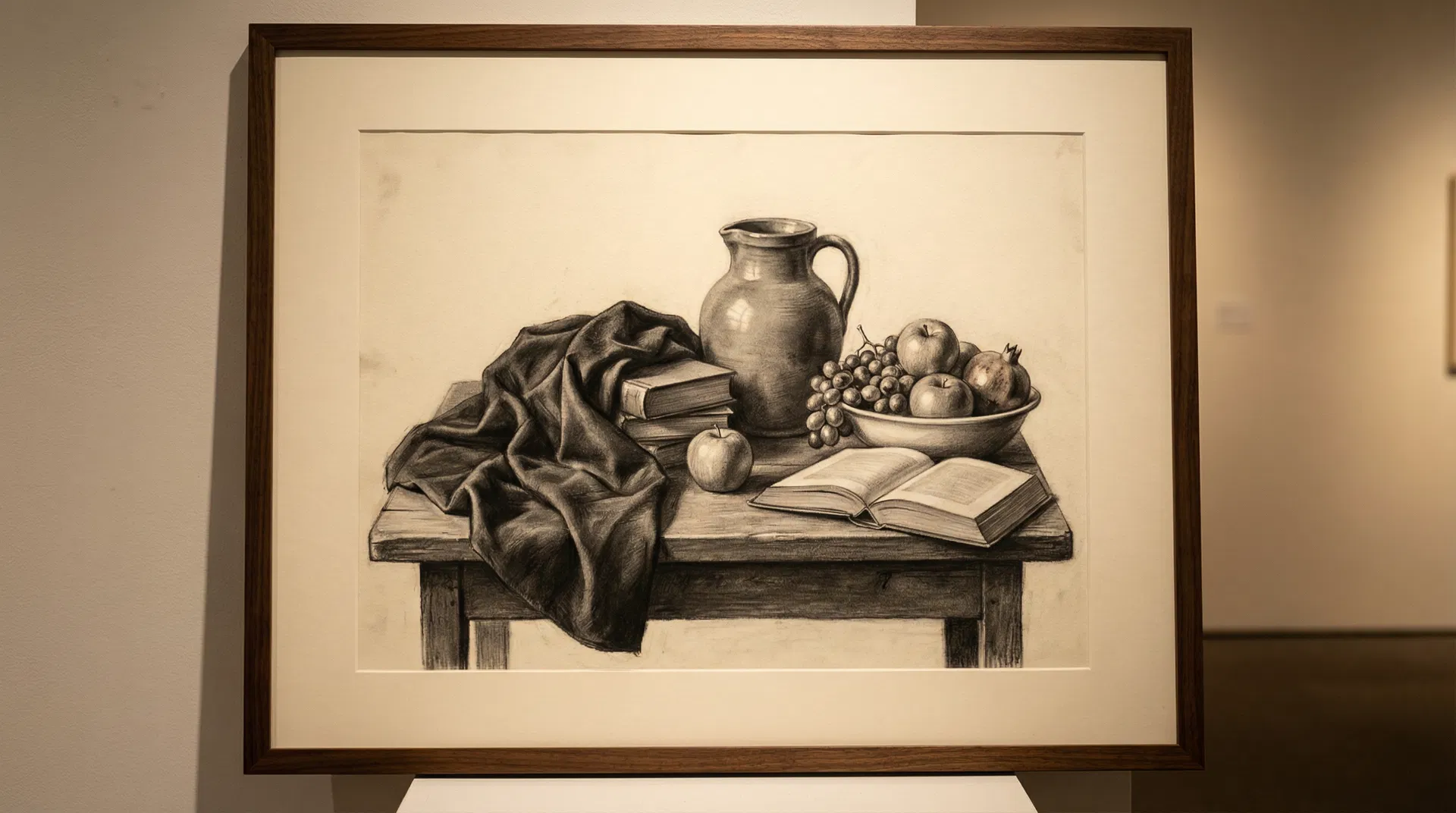
You’ll bring everything together into a complete still life drawing, and I’ll show you the basics of presenting your work — matting, framing, and making your drawings look as good on the wall as they deserve.
Activities
Complete still life applying measurement, form understanding, and light observation simultaneously
Introduction to presentation: mat colours, frame width, displaying black and white work
Individual framing consultation for each student’s best piece
Group critique: discussing work and providing constructive feedback to peers
Curriculum
What you will need
All materials are provided — you don't need to bring anything except yourself and a willingness to learn. Here's what you'll be working with throughout the course:
Drawing Surfaces
Cartridge paper (A3 or larger)
Toned paper (charcoal or grey)
Drawing Tools
Pencils (HB, 2B, 4B)
Charcoal (vine, compressed)
White charcoal or pastel pencil
Erasers & Blending
Kneaded eraser
Plastic eraser
Blending tools (tortillon, paper stump)
Measuring & Other
Pencil sharpener
Measuring tool (pencil or knitting needle)
Adjustable light source (desk lamp)
Logistics
Course details
Who is this for?
Complete beginners start at Level 1. But if you already have some drawing experience, you can join at whichever level feels right for where you are now. Each level builds specific skills, so Level 2 assumes you understand proportion and observation, Level 3 assumes you can handle basic figure work, and so on. Not sure which level suits you? Just ask — I’m happy to help you figure out where to start.
Schedule
Tuesday evenings, 6:00–8:30 PM at Patch Bournemouth (the Academy room), 1st Floor at Bobby’s, The Square, 2-12 Commercial Rd, Bournemouth BH2 5LP. Ideally everyone starts together in Week 1 so we can build progressively, but I understand life can be unpredictable. If you need to miss a session or join a bit late, we can always arrange to catch you up.
Pricing
Each level is £165, or £135 if you book during the early bird window (opens two weeks before each level starts). You can take just one level, or all four — it’s up to you and what you want to develop.
Early Bird
£135
Regular
£165
Materials
All materials are provided. You don't need to bring anything except yourself and willingness to learn.
Between sessions
Each group has a private online space where you can post homework, ask questions, and keep the conversation going. I check in 2–3 times a week to give feedback.
Ready to get started? Spaces are limited to 12 per group, so they do fill up.
Enrol NowWhat You’ll Be Able To Do
By the end of this level
There are no grades or exams. But by the end of the four weeks, you should be able to do these things with growing confidence. I’ll give you individual feedback throughout, and we’ll talk about your progress in the final group critique.
Seeing Accurately
You’ll be able to measure and draw proportions that actually match what’s in front of you, using sight-size techniques.
Understanding Form
You’ll be able to look at any object and see the simple geometric shapes underneath — and draw them convincingly.
Working with Light & Shadow
You’ll be able to identify and draw the seven elements of light, making your objects look three-dimensional.
Putting It All Together
You’ll be able to combine measurement, form, and light into a complete, cohesive drawing.
Finding Your Process
You’ll have a working method you can take home and keep practising with — not just classroom exercises.
The Full Programme
Four levels, four months
Each level picks up where the last one left off. You can take just one to work on something specific, or do all four for the complete foundation.