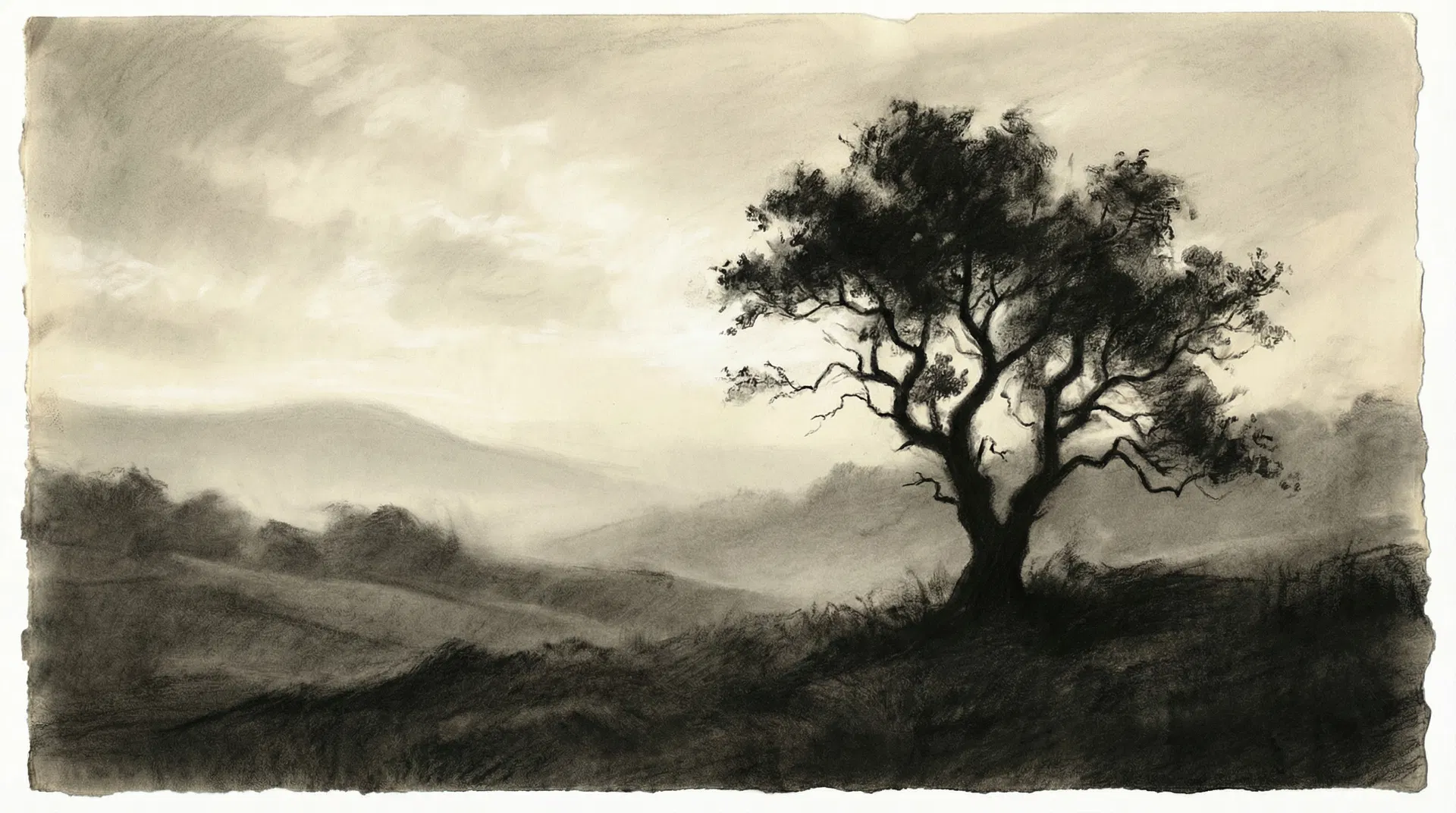
Light & Atmosphere
This is where your drawings start to have mood. Four weeks learning to use light not just to describe form, but to create atmosphere and emotion.
Overview
Light changes everything
In Level 1, you learned the basics of light and shadow. Now you’ll take that much further — learning to control the full range of values with real precision, to use edges deliberately, and to create the feeling of atmosphere and depth in your drawings.
This is the level where drawings stop looking like exercises and start looking like art. You’ll learn how light behaves in complex environments, how softening an edge can push something into the background, and how the right value relationships create emotional impact. It’s where technique starts serving expression.
Duration
4 weeks
One session per week
Session Length
2.5 hours
Tuesdays 6:00–8:30 PM
Cohort Size
12 students
Maximum per group
Investment
£135–£165
Early bird / Regular
Weekly Curriculum
Learning to see light differently
Each week explores a different aspect of how light works. You’ll move from precise value control through edge quality and atmospheric perspective to using light expressively — creating mood, not just describing objects.
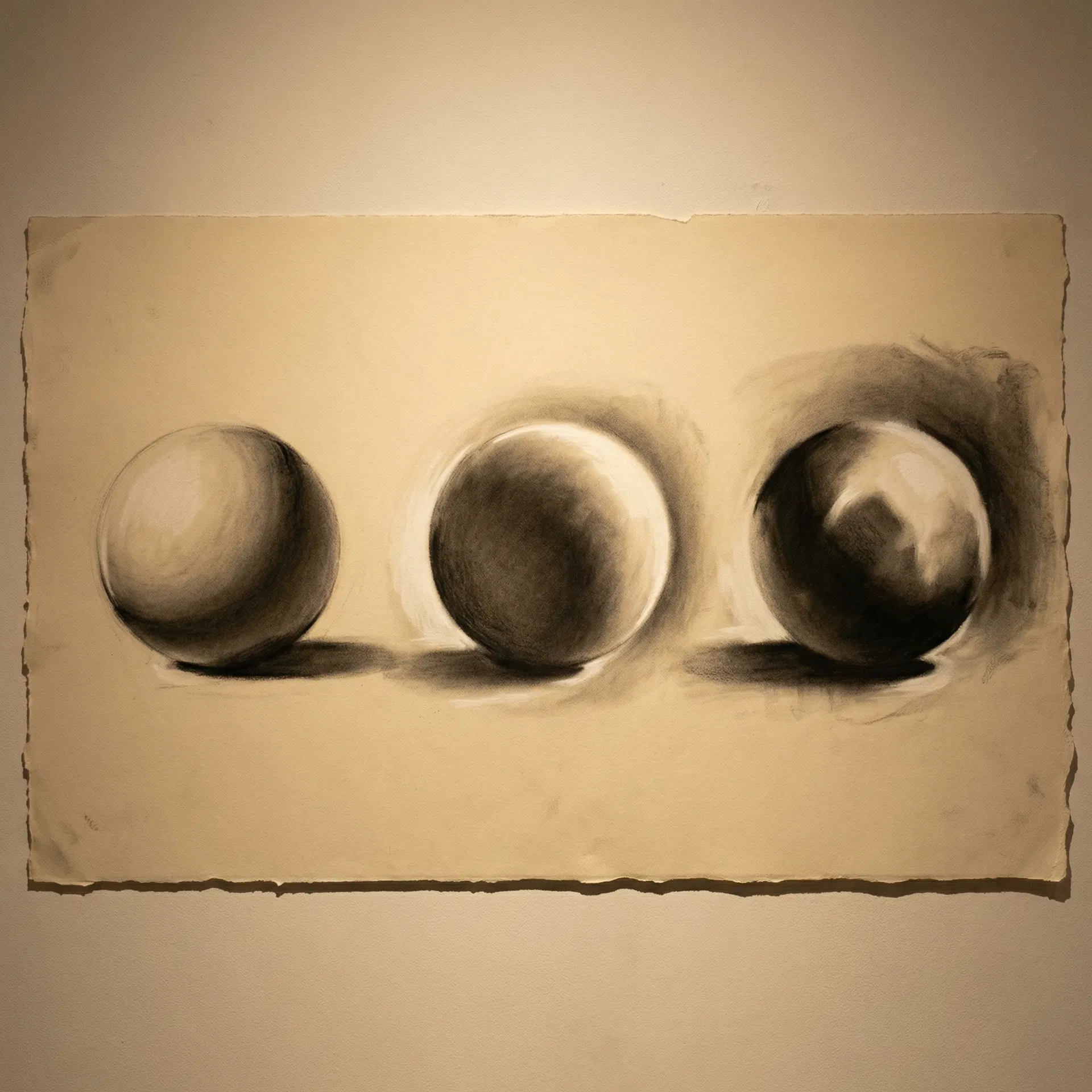
Week 1
Advanced Value Control
Precision across the full tonal range
You’ll develop real precision across the full range of values — from the brightest highlight to the deepest shadow. This is about control, and it’s what separates confident drawings from tentative ones.
Activities
Value scale exercises: creating smooth 10-step gradations from white to black
Rendering spheres with increasingly complex lighting conditions — side light, rim light, chiaroscuro
Maintaining consistent value relationships across an entire composition
Squinting exercises to train value perception and simplify complex scenes
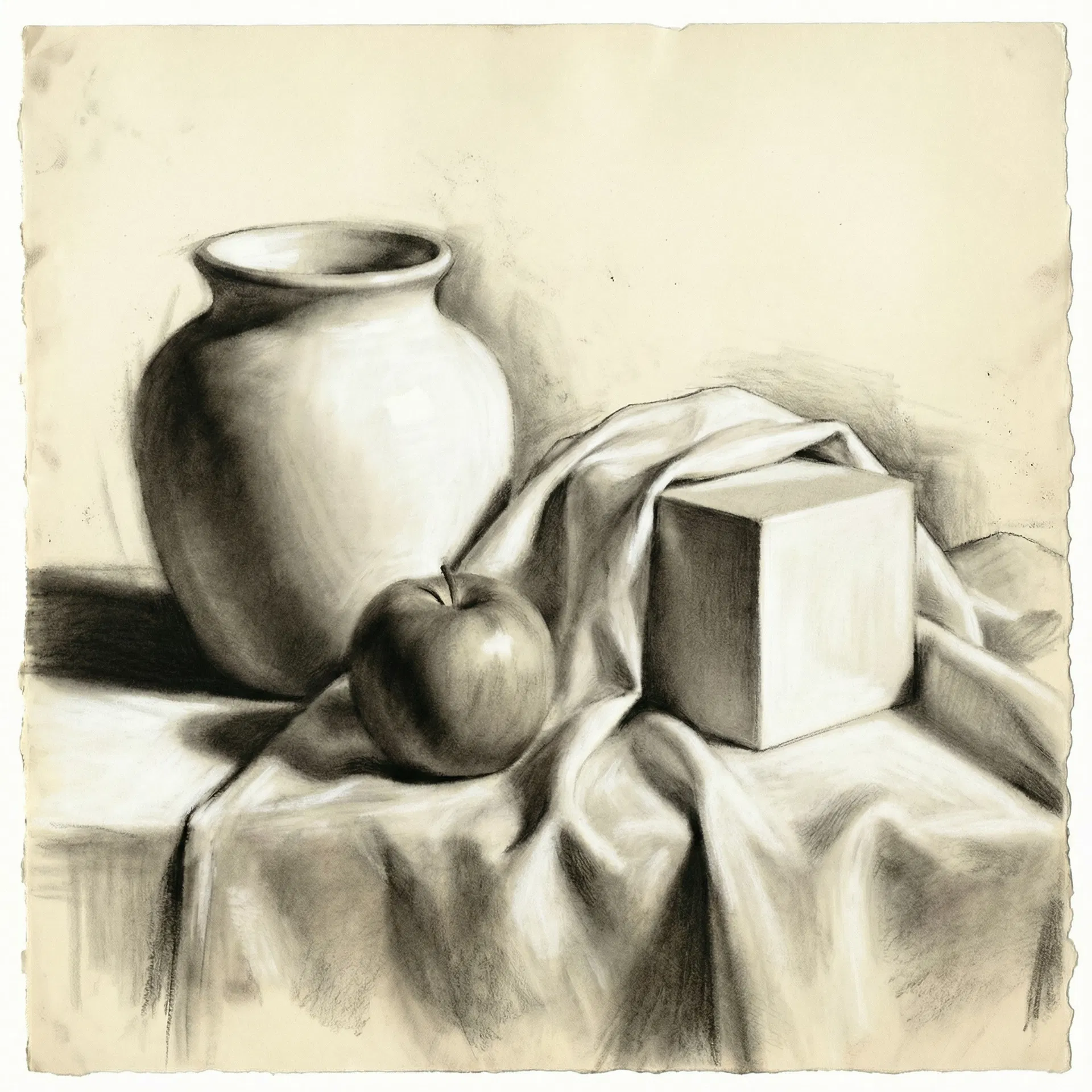
Week 2
Edge Quality
Where sharpness meets softness
You’ll learn that edges are one of the most powerful tools you have. A sharp edge pulls the eye; a lost edge creates mystery and depth. Most people have never thought about edges consciously — after this week, you won’t be able to stop.
Activities
Studying four types of edges: sharp, firm, soft, and lost
Drawing still life focusing exclusively on edge transitions rather than outlines
Understanding how edges define spatial depth — sharp edges advance, soft edges recede
Using lost edges to connect forms and create visual flow
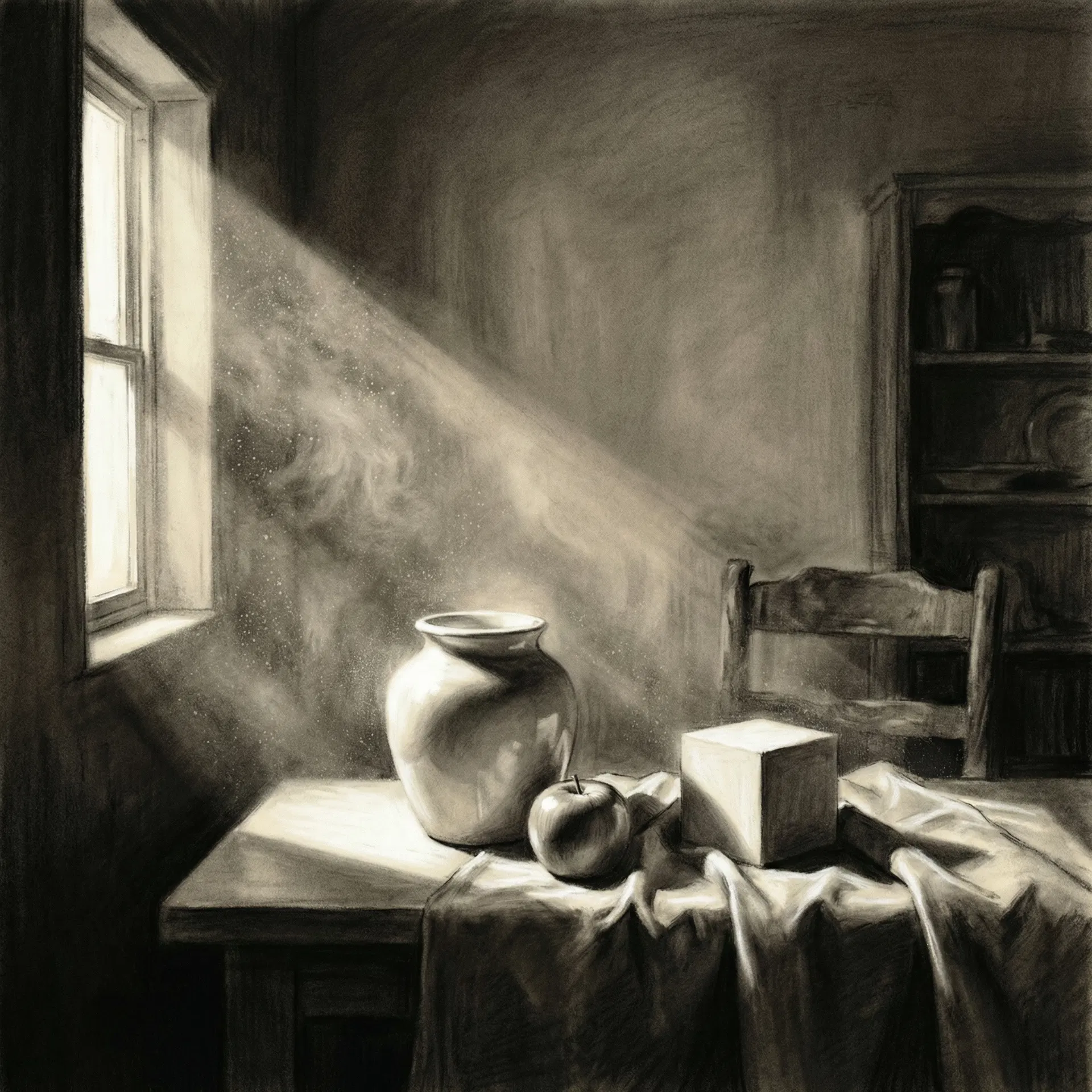
Week 3
Atmospheric Perspective
Creating depth through light and air
You’ll learn how to create the feeling of real depth in your drawings — how values compress, edges soften, and contrast drops as things recede into the distance. It’s surprisingly simple once you see it.
Activities
Understanding the three principles: values compress, edges soften, and contrast decreases with distance
Drawing interior scenes with strong directional light and atmospheric dust or haze
Creating depth in still life through deliberate atmospheric treatment
Combining edge quality and value control to suggest spatial depth
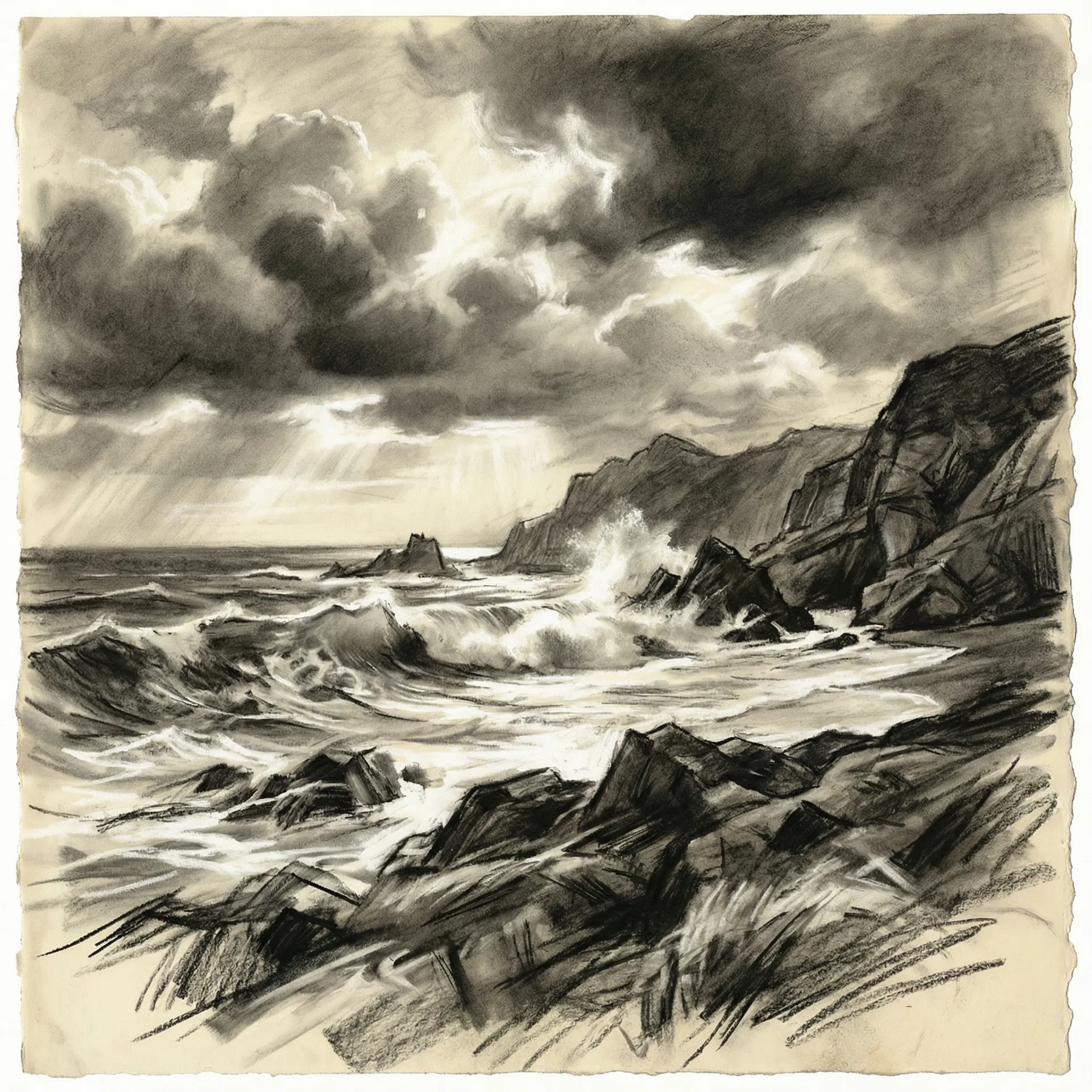
Week 4
Expressive Light
Light as emotional language
You’ll bring everything together and use light to say something — not just describe what’s there, but create a mood. Dramatic, intimate, mysterious, serene — light is how you choose what the viewer feels.
Activities
Exploring how different lighting creates different emotional responses — dramatic, intimate, mysterious, serene
Creating a finished drawing that uses light expressively rather than just descriptively
Combining atmospheric perspective, edge quality, and value control in a unified composition
Group critique focusing on emotional impact and technical integration
Curriculum
What you will need
All materials are provided — you don't need to bring anything except yourself and a willingness to learn. Here's what you'll be working with throughout the course:
Drawing Surfaces
Toned paper (mid-grey, warm grey, cool grey)
Cartridge paper (A3 or larger)
Drawing Tools
Charcoal (vine, various grades)
Compressed charcoal (soft, medium, hard)
White charcoal or pastel pencil
Erasers & Blending
Kneaded eraser
Plastic eraser
Blending tools (tortillon, paper stump, chamois)
Lighting & Other
Adjustable light source (desk lamp)
Pencil sharpener
Fixative spray (for finished work)
Logistics
Course details
Who is this for?
Complete beginners start at Level 1. But if you already have some drawing experience, you can join at whichever level feels right for where you are now. Each level builds specific skills, so Level 2 assumes you understand proportion and observation, Level 3 assumes you can handle basic figure work, and so on. Not sure which level suits you? Just ask — I’m happy to help you figure out where to start.
Schedule
Tuesday evenings, 6:00–8:30 PM at Patch Bournemouth (the Academy room), 1st Floor at Bobby’s, The Square, 2-12 Commercial Rd, Bournemouth BH2 5LP. Ideally everyone starts together in Week 1 so we can build progressively, but I understand life can be unpredictable. If you need to miss a session or join a bit late, we can always arrange to catch you up.
Pricing
Each level is £165, or £135 if you book during the early bird window (opens two weeks before each level starts). You can take just one level, or all four — it’s up to you and what you want to develop.
Early Bird
£135
Regular
£165
Materials
All materials are provided. You don't need to bring anything except yourself and willingness to learn.
Between sessions
Each group has a private online space where you can post homework, ask questions, and keep the conversation going. I check in 2–3 times a week to give feedback.
Ready to get started? Spaces are limited to 12 per group, so they do fill up.
Enrol NowWhat You’ll Be Able To Do
By the end of this level
There are no grades or exams. But by the end of the four weeks, you should be able to do these things with growing confidence. I’ll give you individual feedback throughout, and we’ll talk about your progress in the final group critique.
Value Control
You’ll be able to work confidently across the full value range, with real precision in both the lights and the darks.
Using Edges
You’ll know when to sharpen an edge and when to lose one — and understand why it matters for depth and focus.
Creating Depth
You’ll be able to make things feel near or far through atmospheric perspective, not just overlap and size.
Expressive Light
You’ll be able to use light to create mood and emotion in your drawings, not just describe what’s there.
Your Own Voice
You’ll start to see your own preferences emerging — the kind of light and atmosphere that resonates with you.
The Full Programme
Four levels, four months
Each level picks up where the last one left off. You can take just one to work on something specific, or do all four for the complete foundation.